
5 Best Investing Books for Beginners 2026 (Plus Trading and Angel Investing Picks)
Contains affiliate links. We may earn a commission at no extra cost to you. As an Amazon Associate, TechTars earns from qualifying purchases. Disclosure
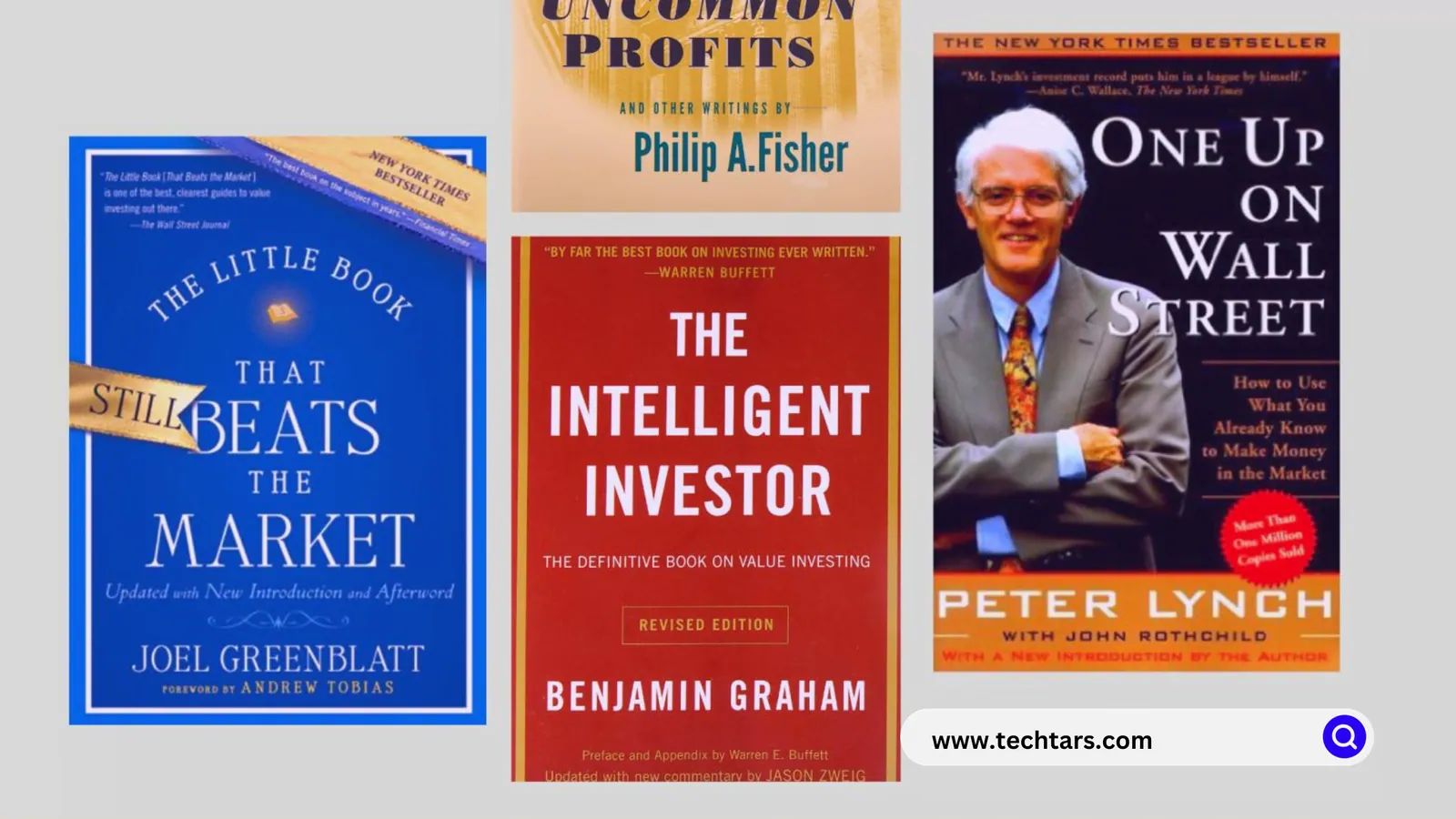
These five books teach the ideas behind good investing, and they still hold up in 2026. Under each book you will find what it teaches and who it suits. After the five, there are picks for Indian investors, stock trading and angel investing.
There are thousands of YouTube channels and Telegram groups about the stock market. Many of them exist to sell courses or tips, not to teach. A book written by someone who managed real money for decades is a slower, cheaper and safer teacher.
Learn before you put money in. If you start trading without the basics, the market takes its tuition fee out of your capital. Most beginners lose money in the same few ways, so it helps to know the 5 most common investing mistakes before you start.
New to the stock market? Start with this step-by-step guide to investing in India.
Quick list: best investing books for beginners in 2026
- The Intelligent Investor by Benjamin Graham: value investing and how to think about risk.
- One Up on Wall Street by Peter Lynch: finding good stocks from what you see in daily life.
- Common Stocks and Uncommon Profits by Philip Fisher: growth investing and judging company quality.
- The Little Book That Beats the Market by Joel Greenblatt: a simple, rules-based way to pick stocks.
- Beating the Street by Peter Lynch: how a fund manager actually researches stocks.
The 5 best investing books for beginners
1. The Intelligent Investor by Benjamin Graham
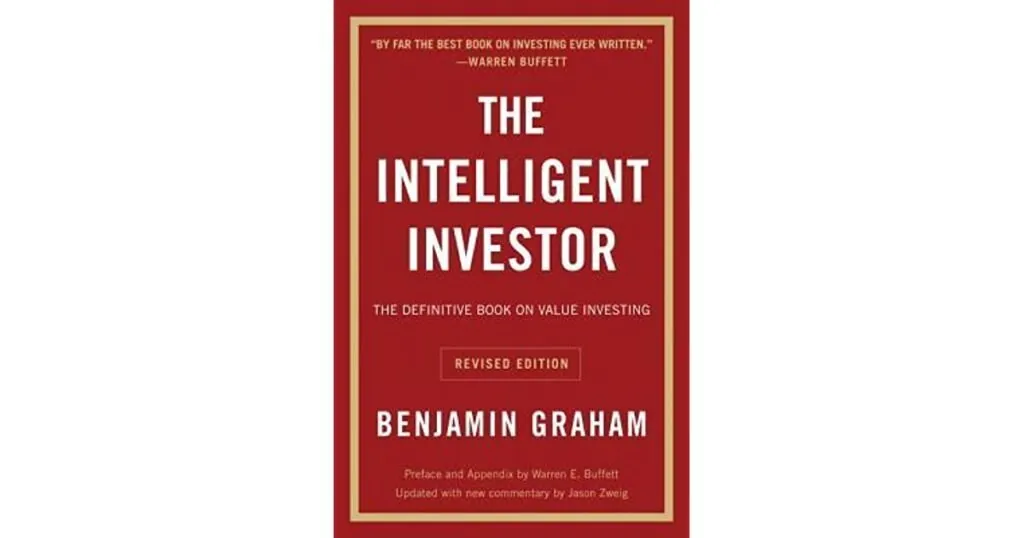
This book is often called the bible of value investing. Benjamin Graham first published it in 1949. He taught Warren Buffett at Columbia, and Buffett has called it by far the best book about investing ever written.
Graham's main idea is that a share is part-ownership of a real business, not a ticket that moves on a screen. He introduces "Mr. Market", a moody partner who offers you a new price every day that you are free to ignore. He also explains the "margin of safety": buy only when the price is well below what the business is worth, so a mistake does not ruin you. If the idea is new to you, first read what value investing is and how it works.
Read the revised edition with Jason Zweig's commentary. Zweig explains each chapter with modern examples, which makes the older text much easier to follow.
Best for: anyone who wants a long-term, low-risk approach. It is dense, so read one chapter a week.
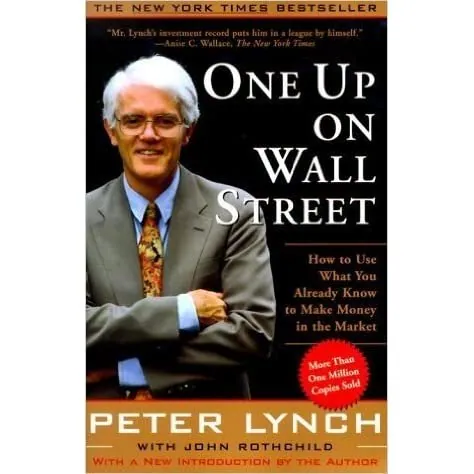
2. One Up on Wall Street by Peter Lynch
Peter Lynch ran Fidelity's Magellan Fund from 1977 to 1990 and averaged about 29% a year over those 13 years, one of the best records of any fund manager. He wrote this book in 1989.
His message for beginners is that you often notice good companies before professionals do, because you use their products. You then check the numbers before you buy. He sorts stocks into six types (slow growers, stalwarts, fast growers, cyclicals, turnarounds and asset plays) and explains what to expect from each one.
Best for: your first stock-picking book. Along with Greenblatt's, it is the easiest read on this list.
3. Common Stocks and Uncommon Profits by Philip Fisher
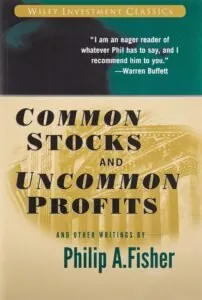
Philip Fisher published this book in 1958, and it is still one of the best books on growth investing. Graham looks for cheap stocks. Fisher looks for outstanding companies and holds them for a long time.
The book gives 15 points to check in a company, such as whether its products have room to grow for years and whether management is honest with shareholders. He also explains "scuttlebutt": learning about a company by talking to its customers, suppliers and competitors.
Best for: investors who want to judge business quality, not only valuation ratios.
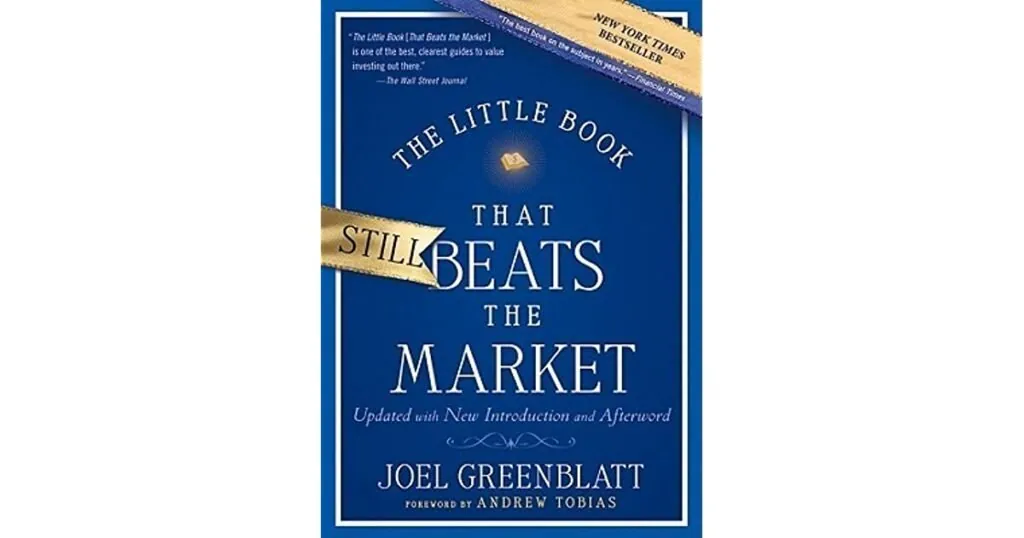
4. The Little Book That Beats the Market by Joel Greenblatt
Joel Greenblatt wrote this book in 2005 so that his children could understand how he invests. An updated edition, The Little Book That Still Beats the Market, came out in 2010. It is short, funny and the fastest read here.
It explains his "magic formula": rank companies by earnings yield (how cheap they are) and return on capital (how good the business is), buy the ones that score well on both, and hold them for about a year. You do not have to follow the formula exactly. The lesson is why a good business at a cheap price beats either one alone.
Best for: complete beginners who want one simple idea they can remember.
5. Beating the Street by Peter Lynch
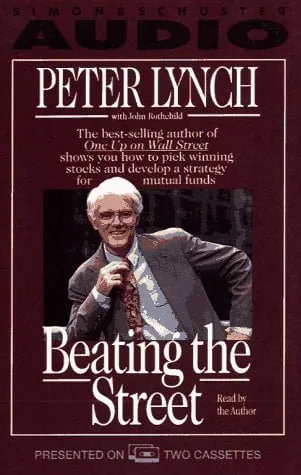
Lynch's second book (1993) is more practical than the first. He walks through how he researched real stocks at Magellan, industry by industry, and shares his "Peter's Principles", short rules he learned from his own mistakes.
His advice is simple: put money only into businesses you have researched and understand, and be ready to hold them when prices fall.
Best for: reading after One Up on Wall Street, once you want to see the method applied to real companies.
Also read: Top investors of all time and how they built their wealth
Best books for Indian investors
The five books above are American, but the ideas work just as well for NSE and BSE stocks. These books are written for India, with Indian companies, products and tax rules.
- Coffee Can Investing by Saurabh Mukherjea, Rakshit Ranjan and Pranab Uniyal: buy high-quality Indian companies and leave them alone for 10 years.
- Let's Talk Money by Monika Halan: personal finance for Indian families, from emergency funds and insurance to mutual funds.
- Stocks to Riches by Parag Parikh: how investor behaviour drives the market, told through Indian market history.
- Value Investing and Behavioral Finance by Parag Parikh: value investing and the mental mistakes that stop people from following it.
- How to Avoid Loss and Earn Consistently in the Stock Market by Prasenjit Paul: a beginner's method for picking Indian stocks.
If mutual funds are your starting point, read how to select a mutual fund. If you plan to invest a fixed amount every month, the SIP calculator shows what it can grow to.
Best stock trading books
Investing and trading are different games. Investors buy businesses and hold them for years. Traders hold positions for days or weeks and care most about price, risk per trade and their own discipline. If you want to trade, read these after at least one investing book.
- Trading in the Zone by Mark Douglas: why most traders lose because of fear and overconfidence rather than bad analysis.
- Reminiscences of a Stock Operator by Edwin Lefèvre: a lightly fictionalised story of the trader Jesse Livermore, first published in 1923 and still the most quoted trading book.
- Technical Analysis of the Financial Markets by John J. Murphy: the standard reference for charts, trends and indicators.
Before you place a trade, decide how much you can lose on it. The position size calculator does that maths, and the same logic works for stocks. To start with indicators, read our guide to the RSI indicator.
Best angel investing books
Angel investing means putting your own money into early-stage startups in exchange for a share of the company. The risk is high: most startups fail, and your money can be locked up for 7 to 10 years. Read these before you write a cheque.
- Angel by Jason Calacanis (2017): how an experienced angel investor judges founders and spreads money across many startups.
- Venture Deals by Brad Feld and Jason Mendelson: term sheets, valuation and the legal terms you will be asked to sign.
In India, angel funds are regulated by SEBI and some deals are open only to accredited investors. Check the current rules before you invest.
Which order to read them in (easy to hard)
- The Little Book That Beats the Market
- One Up on Wall Street
- Beating the Street
- University of Berkshire Hathaway: 30 Years of Lessons Learned from Warren Buffett & Charlie Munger at the Annual Shareholders Meeting
- Common Stocks and Uncommon Profits
- The Intelligent Investor
- The Essays of Warren Buffett: Lessons for Corporate America
More books worth reading
Once you have finished the main five, these are worth your time:
- The Psychology of Money by Morgan Housel: short stories about how people really behave with money.
- The Warren Buffett Way by Robert G. Hagstrom
- Learn to Earn by Peter Lynch and John Rothchild
- Stocks for the Long Run by Jeremy Siegel
- A Random Walk Down Wall Street by Burton Malkiel
- The Little Book of Valuation by Aswath Damodaran
- The Dhandho Investor by Mohnish Pabrai
Also read: Top stock market movies and web series